
Chief Charles Umuezurike Orie: A Candidate to Unite Imo State Through Equity, Justice and Fairness
By Chief Jerry Amadi (Writes from Lagos)
The conversation about the future of Imo State must move beyond sentiment to substance, and beyond politics to productivity. At the centre of this reality lies Ohaji/Egbema—Imo State’s undisputed energy hub and a cornerstone of Nigeria’s hydrocarbon economy. Yet, despite its enormous economic contributions, the area has remained significantly underdeveloped.
In many ways, the situation echoes the circumstances that contributed to the emergence of former President Goodluck Jonathan. At the time, the people of the Niger Delta agitated against years of marginalisation and underdevelopment despite the region’s enormous contribution to Nigeria’s economy. Their agitation was, among other things, a demand for political inclusion and an opportunity for the region to produce the country’s president.
This occurred at a time when leaders and opinion moulders from the South-East were advocating for equity and insisting that the presidency should be zoned to the South-East. However, rather than allowing that demand to prevent a broader consideration of Nigeria’s political realities, some opinion leaders recognised the importance of conceding the presidency to the Niger Delta at that critical moment. Goodluck Jonathan subsequently emerged as a candidate capable of uniting the country’s geopolitical zones and went on to become President of Nigeria.
The lesson for Imo State is clear: equity is not merely about where power is traditionally expected to go; it is also about recognising realities, correcting historical imbalances, rewarding contribution, and choosing leadership that can unite the people.
Ohaji/Egbema: The Economic Powerhouse of Imo State
Ohaji/Egbema is not just another Local Government Area. It is a strategic economic corridor within the Niger Delta Basin, hosting vast crude oil reserves estimated at between 500 million and 1 billion barrels, as well as approximately 7.8 trillion cubic feet of natural gas.
The area is widely regarded as one of Nigeria’s significant natural gas deposit zones, positioning it as a critical pillar in the nation’s transition towards a gas-powered economy. With more than 163 oil wells across Imo State, many of which are located within this axis, Ohaji/Egbema remains a major hub for upstream oil and gas development.
More importantly, Ohaji/Egbema is home to several transformative national assets, including the ANOH Gas Processing Plant at Assa, one of Nigeria’s major gas processing facilities, with an estimated processing capacity of approximately 850 MMSCF/day; the Assa North–Ohaji South Gas Field; the Waltersmith Modular Refinery; and the Egbema power infrastructure.
Together, these assets position the area as a potential driver of Nigeria’s “Decade of Gas” initiative and a future industrial hub for petrochemicals, power generation, manufacturing, and other gas-based industries.
Yet, despite this enormous economic contribution, the people of Ohaji/Egbema have endured decades of infrastructural neglect, environmental degradation, and inadequate socio-economic benefits. This disconnect between resource wealth and human development presents a compelling case for equity, justice, fairness, and inclusive governance.
Why Chief Charles Umuezurike Orie?
It is within this context that the emergence of Chief Charles Umuezurike Orie becomes not only relevant but imperative.
As the former Managing Director of ISOPADEC, Chief Orie demonstrated a leadership style anchored on impact, accountability, and measurable results. His record includes the construction of three ultra-modern hospitals across oil-producing local government areas, the rehabilitation of 20 primary healthcare centres, the establishment of a skill-acquisition centre, and the delivery of critical infrastructure, including bridges that improved rural connectivity.
These are not merely campaign promises; they are achievements that can be examined and verified.
Beyond physical infrastructure, his administration empowered young people through employment opportunities, agricultural initiatives, and scholarship programmes, laying a foundation for sustainable human-capital development.
His international exposure, particularly through his experience within the diaspora, further equips him with the strategic outlook required to attract investment, promote innovation, strengthen institutions, and position Imo State in line with global best practices.
Beyond Zoning: A Question of Justice and Development
The case is straightforward and compelling.
If Imo State is to fully harness its oil and gas resources, transition towards a gas-driven industrial economy, and deliver equitable development across its communities, it must entrust leadership to someone who understands both the resource economy and the people it is meant to serve.
For decades, Ohaji/Egbema has contributed significantly to the economic strength of Imo State. It is therefore both just and strategically prudent that the region should now have the opportunity to provide the leadership needed to transform that economic strength into shared prosperity.
The emergence of Chief Charles Umuezurike Orie should therefore not be viewed merely through the narrow lens of zoning. His candidacy represents a broader conversation about equity, justice, fairness, competence, experience, and the need for inclusive development.
Chief Charles Umuezurike Orie represents competence, integrity, experience, and a clear vision for sustainable development. His candidacy is not merely about where power should go; it is about who is prepared to use that power responsibly, who has a record of performance, and who can unite the various interests and zones of Imo State around a common vision.
At this defining moment in the history of Imo State, the choice should be about more than sentiment. It should be about competence. It should be about fairness. It should be about inclusion. And above all, it should be about building an Imo State where every zone contributes, participates, and benefits equitably from the wealth and opportunities of the state.
Chief Charles Umuezurike Orie offers an opportunity to turn the economic strength of Ohaji/Egbema into a catalyst for shared prosperity across Imo State—and to build a government founded on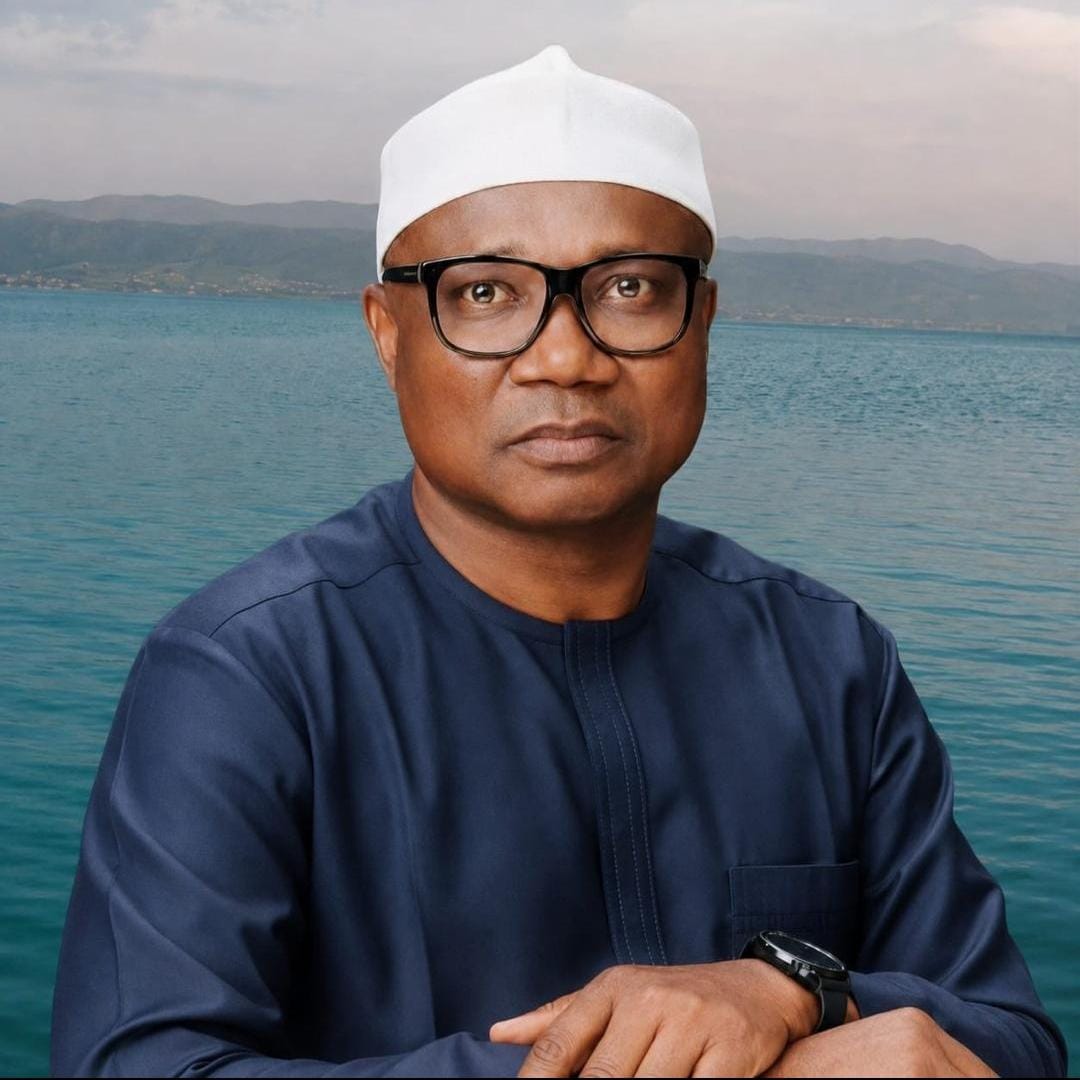 equity, justice, fairness, competence, and unity.
About The Author

You may also like
-
Akagburuonye Receives $7.3m Canadian Medical Equipment Donation, Distributes to 32 Imo Hospitals Set for November 7 unveiling as beneficiary facilities prepare to boost healthcare delivery across Imo’s 27 LGAs
-
Cover and Inside Pages of Trumpeta, Friday, October 9th, 2026
-
Cover and Inside Pages of Trumpeta, Thursday, October 8th, 2026
-
Exempt Me From Anything Not Deep-Rooted In God, Akagburuonye Cries Out
-
CHIEF CHARLES ORIE: A STEADY HAND, A BOLD MIND, AND ONE OF IMO STATE’S MOST INFLUENTIAL DRIVERS OF CHANGE