
IMO 2027/2028: CHARLES ORIE’S GRAND VISION FOR A NEW IMO — EDUCATION, ECONOMIC RENAISSANCE, PROSPERITY!
By Stephen Eze, writes from Owerri.
The future of Imo State demands leadership that can think beyond political calculations, rise above the limitations of conventional governance and envision a society where opportunities abound, economic prosperity is attainable and the welfare of the people remains the ultimate measure of success.
As political activities gradually gather momentum ahead of the 2027/2028 Imo State governorship election, the aspiration of Chief Charles Orie, popularly known as Akuatuegwu, is attracting attention as part of the emerging conversation about who should steer the affairs of the State in the next political dispensation.
At the heart of his governorship ambition is a proposition that deserves serious consideration: building on the developmental gains already recorded in Imo while opening new frontiers of opportunity through education, economic renaissance, human capital development, infrastructure, healthcare and inclusive governance.
For a State blessed with abundant human resources, entrepreneurial ingenuity, intellectual capacity and enormous economic potential, the next chapter must be about converting these advantages into tangible benefits for the people.
The challenge is not simply to produce another governor. It is to produce leadership capable of transforming Imo’s enormous potential into enduring prosperity.
And this is where Chief Charles Orie’s aspiration enters the conversation.
EDUCATION: BUILDING THE FOUNDATION FOR A GREATER IMO
A society that neglects education mortgages its future. Conversely, a society that invests deliberately in the intellectual development of its citizens creates the foundation for sustainable prosperity.
Education should therefore occupy a prominent position in the development philosophy of the next administration.
Chief Orie’s aspiration presents an opportunity to advance a vision in which every Imo child, irrespective of family background or financial circumstances, has access to quality education and a fair opportunity to succeed.
The State must move beyond the traditional understanding of education as merely acquiring certificates. The modern world demands creativity, technological competence, critical thinking, entrepreneurship and practical skills.
Imo needs an educational system that prepares its young people for the realities of the global economy.
This requires improved learning facilities, better teachers’ welfare, functional technical colleges, modern vocational training centres, scholarship opportunities and stronger partnerships with universities and private-sector institutions.
Particular attention should be given to science, technology, engineering, digital innovation and entrepreneurship.
The next governor must understand that the classroom is not merely a place where children acquire knowledge; it is where the future workforce, entrepreneurs, professionals and leaders of Imo are prepared.
For Akuatuegwu, the opportunity is to champion an educational revolution that will make learning a genuine instrument of social mobility and economic empowerment.
ECONOMIC RENAISSANCE: UNLOCKING IMO’S WEALTH-CREATING POTENTIAL
Perhaps the most compelling challenge before the next administration is the need to reposition Imo State as a productive and investment-friendly economy.
The State cannot afford to depend indefinitely on government spending and the informal economy as its principal economic lifelines.
Imo requires a deliberate transition from a consumption-driven economy to one anchored on production, industrialisation, investment, enterprise and employment generation.
This is an area where Chief Charles Orie’s business background could offer a useful perspective in shaping the state’s economic direction.
The next government must identify and harness the opportunities available in agriculture, manufacturing, solid minerals, tourism, hospitality, technology, commerce and the creative industry.
The objective should be to create an environment where businesses can grow, investors can operate confidently and young people can find meaningful economic opportunities without necessarily depending on government employment.
A comprehensive economic agenda should prioritise public-private partnerships, access to affordable business financing, improved infrastructure, investor-friendly policies and support for small and medium-scale enterprises.
Imo’s agricultural resources, particularly oil palm, cassava, rice and other produce, should be developed into commercially viable industries capable of generating employment and expanding the state’s revenue base.
The State must also encourage local processing and value addition rather than allowing its agricultural and mineral resources to leave without creating sufficient economic benefits for its people.
The ultimate ambition should be an Imo where government creates the enabling environment, businesses generate wealth, industries provide employment and citizens become active participants in economic growth.
That is the foundation of a genuine economic renaissance.
CONSOLIDATING DEVELOPMENT WHILE OPENING NEW FRONTIERS
Imo State has witnessed significant infrastructure and development initiatives under the administration of Governor Hope Uzodimma.
The next administration will inherit both the achievements and the unfinished responsibilities of governance.
The challenge will be to sustain worthwhile projects, strengthen institutions, address outstanding development needs and introduce fresh ideas capable of taking the state to a higher level.
Chief Orie has publicly expressed interest in consolidating on the developmental achievements of the present administration while pursuing his own governance ambitions.
This presents an opportunity for a leadership philosophy that recognises the importance of continuity without sacrificing innovation.
Government should not become an endless cycle of abandoning existing programmes and starting afresh whenever there is a change of administration.
Public investments must be protected, successful policies sustained and areas requiring improvement addressed with courage and administrative competence.
At the same time, continuity must never become an excuse for complacency. The next administration must be prepared to introduce fresh initiatives, correct weaknesses and respond to the changing needs of the people.
The real test of leadership is the ability to preserve what works, improve what needs attention and create what the future demands.
Chief Orie’s aspiration must therefore be judged by how convincingly he can translate this philosophy into practical governance.
HUMAN CAPITAL DEVELOPMENT: THE PEOPLE ARE IMO’S GREATEST ASSET
Beyond roads, bridges, buildings and other physical infrastructure, the greatest wealth of Imo State lies in its people.
A progressive government must recognise that development becomes meaningful only when it improves the living conditions and opportunities of ordinary citizens.
Youth empowerment, employment generation, skills acquisition, workers’ welfare, healthcare and social protection must form essential components of the next administration’s agenda.
Imo’s young population represents an enormous resource. With the right policies, training and investment, the youths can become the driving force of the state’s economic transformation.
The government must create opportunities for graduates, artisans, technicians, entrepreneurs and professionals to develop their talents and become economically independent.
Women must also receive greater support through entrepreneurship programmes, access to financing, vocational training and policies that encourage their participation in economic and public life.
Senior citizens, pensioners and vulnerable households deserve a government that recognises their dignity and provides appropriate social protection.
The next governor must understand that the prosperity of a state cannot be measured exclusively by its revenue figures or infrastructure portfolio. It must also be measured by the quality of life of its citizens.
AGRICULTURE AND INDUSTRIALISATION: FROM POTENTIAL TO PRODUCTIVITY
Imo’s agricultural sector presents enormous possibilities for economic growth.
The State has the land, human resources and agricultural traditions to develop a modern agricultural economy capable of supporting food security, industrial production and employment.
What is required is a deliberate departure from subsistence farming towards mechanised and commercially organised agriculture.
Farmers need access to improved seedlings, modern equipment, affordable credit, irrigation, storage facilities, processing plants and reliable markets.
The establishment of agricultural processing centres and agro-industrial clusters could stimulate rural economies, reduce post-harvest losses and create employment across the value chain.
The next administration must also recognise the relationship between agriculture and industrialisation.
A thriving agricultural sector can supply raw materials to industries, while manufacturing and processing businesses can create additional value and employment.
For Chief Orie, a credible economic blueprint must demonstrate how these interconnected sectors can be developed into sustainable wealth-generating opportunities.
HEALTHCARE, SECURITY AND INFRASTRUCTURE: THE PILLARS OF DEVELOPMENT
No development agenda can succeed without adequate attention to healthcare, security and infrastructure.
The next administration must consolidate improvements in healthcare delivery, strengthen primary healthcare centres, equip hospitals, improve the welfare of medical personnel and expand access to affordable medical services.
Preventive healthcare, maternal and child health, emergency medical services and health insurance should receive particular attention.
Security must equally remain a priority. Investors cannot operate confidently, businesses cannot flourish and communities cannot develop in an atmosphere of fear and uncertainty.
A coordinated security framework involving relevant security agencies, traditional institutions, community leaders and local stakeholders is necessary.
Beyond enforcement, government must address unemployment, poverty and other socioeconomic conditions that make vulnerable young people susceptible to criminal activities.
Infrastructure development must also be sustained, particularly in road construction, electricity, water supply, drainage, transportation and rural connectivity.
For Chief Charles Orie, infrastructure is not merely about political visibility. It is an economic instrument that connects communities, reduces business costs and stimulates development.
Lastly, the future of Imo must accommodate every community, irrespective of geographical location, political affiliation or social standing.
From Orlu to Okigwe and Owerri, every local government area deserves a fair opportunity to benefit from government programmes and development initiatives.
Chief Charles Orie’s aspiration rests on several considerations, including his background in business, experience in public administration, community development involvement, reported philanthropic interventions and stated interest in advancing the development of Imo State.
He has an opportunity to bring these experiences into a broader conversation about the future of governance in the State.
The future of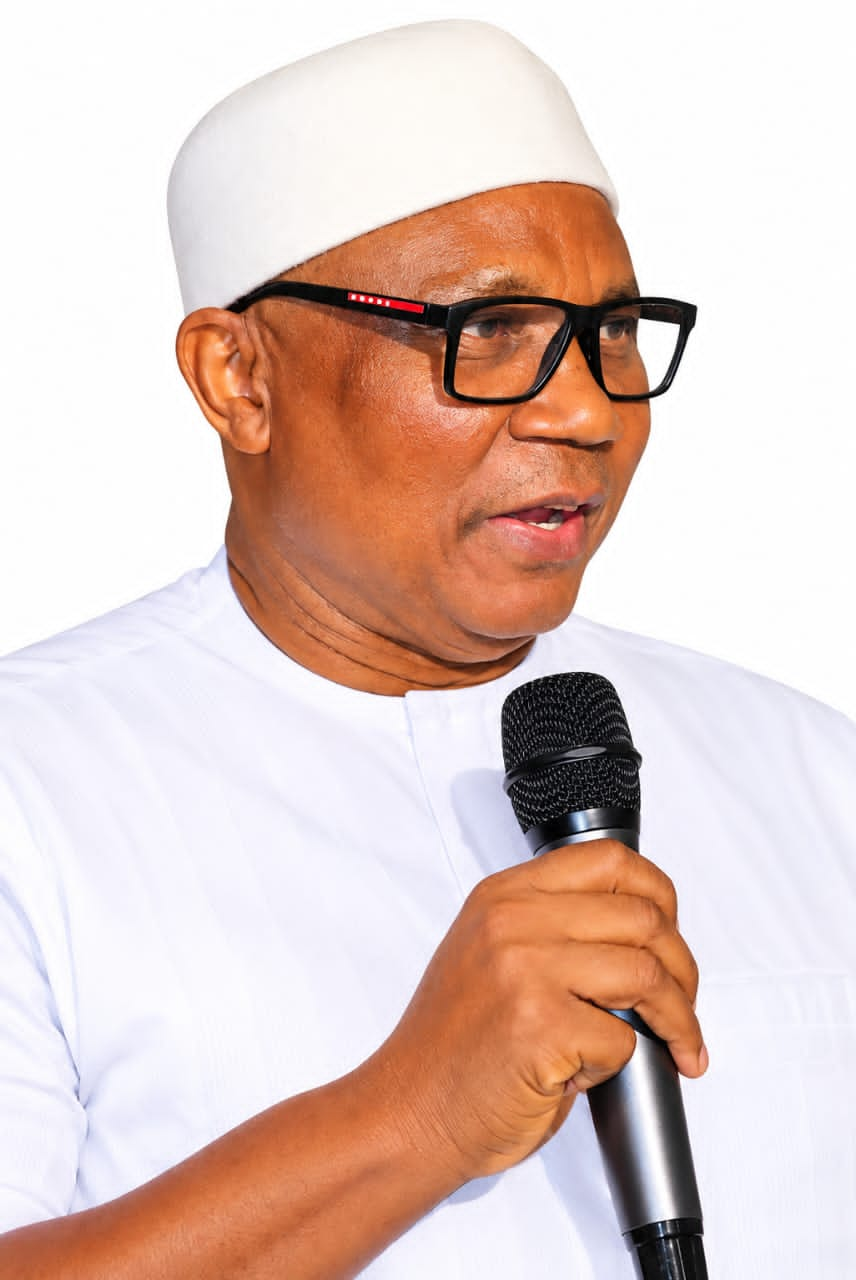 Imo must be bigger than politics, greater than individual ambition, and firmly anchored on the common good.
About The Author

You may also like
-
NWANGELE STAKEHOLDERS INAUGURATE ELDERS COUNCIL FOR ADVISORY ROLE TOWARD AMARA IWUANYANWU’S REELCTION, OTHER APC CANDIDATES
-
Uzodimma Is the Face of APC, Tinubu Says Ohanweh
-
IDEATO STAKEHOLDERS FORUM (ISF) PRESS STATEMENT PLOT TO BLACKMAIL INEC OFFICIALS, SECURITY AGENTS: ISF DEMANDS IMMEDIATE DISQUALIFICATION OF IKENGA UGOCHINYERE
-
Cover and Inside Pages of Trumpeta Thursday November 19th,2026
-
FEAR, INTIMIDATION, VIOLENCE: OWERRI CHURCH CRIES OUT TO UZODIMMA OVER ALLEGED LAND GRABBING