
Charter of Equity; Okigwe Response: Why Owerri’s First Shot Is a Test of Justice, Trust and Political Prudence
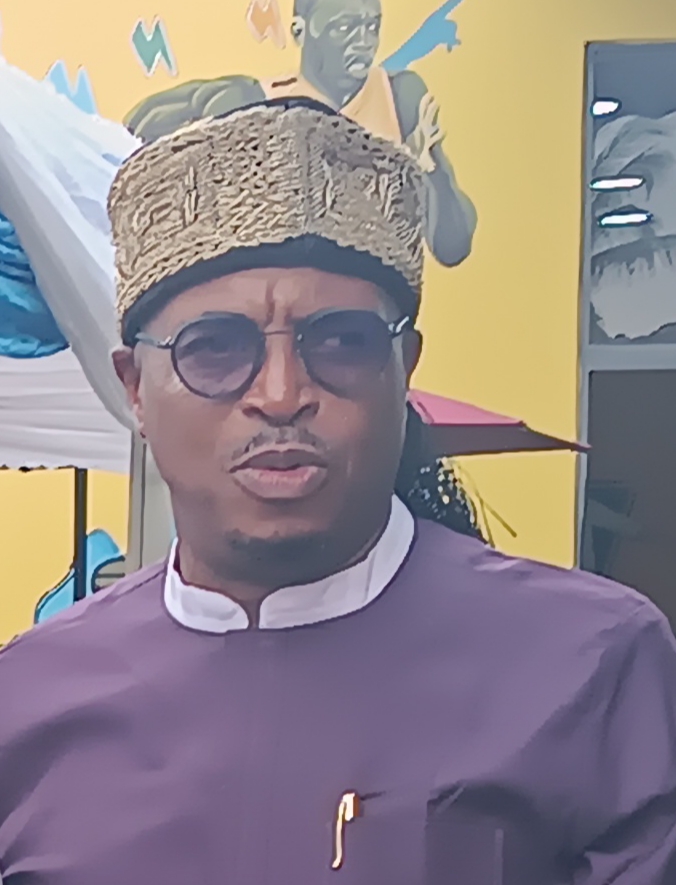
_By Dr Obinna Ibe ( Former Senatorial Aspirant Imo East)_
The debate over the Charter of Equity in Imo State is no longer merely about which senatorial zone should produce the next governor. At its core, it is about whether political agreements freely reached by the leadership of the three senatorial zones can be trusted, whether the state can deliberately replace rancour with fairness, and whether Imo can finally establish a political culture in which equity is stronger than primordial calculations.
That is why the recent interaction between Owerri and Okigwe zones deserves careful reflection.
The Charter of Equity was conceived against the background of years of political competition, suspicion and perceived marginalisation among Imo’s three senatorial zones Owerri, Orlu and Okigwe. The intervention of the Imo elders’ council, alongside Governor Hope Uzodinma, was therefore significant. The objective was not simply to select a beneficiary for one electoral cycle. It was to establish a predictable principle of rotation capable of reducing political tension and giving each zone a reasonable expectation of participation in the governance of the state.
The understanding was subsequently reduced to writing and endorsed by representatives of the three zones, including traditional rulers and political leaders.
*That distinction is important:*
A political understanding that exists only in speeches can be contested, reinterpreted or forgotten. A written agreement signed by the parties is a different matter. It creates an expectation of fidelity and imposes a moral obligation on the parties to honour what they collectively accepted.
*The Traditional Igbo Gesture of Gratitude*
Against this background, Owerri’s recent mobilisation should not be interpreted as an act of triumphalism.
On August 8, 9 and 14, Owerri leaders, political actors and traditional rulers, under the umbrella of Owerri United and led by Chief Charles Amadi, reportedly visited and engaged leaders of the other zones to express gratitude for the support extended to Owerri under the Charter of Equity.
There is something profoundly significant about that gesture.
In Igbo culture, gratitude is not weakness. It is an acknowledgement of relationship, obligation and reciprocity. A person who remembers those who stood by him in difficult circumstances demonstrates that he understands that tomorrow’s relationships are built upon today’s conduct.
The response from the elders’ council and Orlu zone, as described by participants, was encouraging. They appreciated the gesture and reaffirmed their commitment to the principle of the Charter of Equity.
It was therefore against this backdrop that the Owerri delegation proceeded to Okigwe on August 14 and met leaders at the residence of Chief Tony Chukwu.
What followed appears to have created an uncomfortable impression.
*Was the Charter Already Settled—or Is It Still a Negotiation?*
The response attributed to Nze Fidelis Ozichukwu Chukwu, former President-General of Ohanaeze Ndigbo and spokesperson for Okigwe at the gathering, appeared to treat the question of the Charter almost as though the negotiations were still open.
*If that interpretation is correct, it raises a fundamental question:*
If the three zones already negotiated, documented and signed an agreement, what exactly remains to be negotiated?
There is nothing wrong with disagreement in a democracy. There is nothing wrong with asking questions about an agreement. There is even nothing wrong with seeking clarification where the language of an agreement is ambiguous.
But there is a profound difference between seeking clarification and attempting to reopen a concluded agreement because the outcome has become politically inconvenient.
*That distinction must not be lost.*
If Okigwe has a substantive, documented and compelling reason why the Charter should be altered, that argument should be placed openly before the people of Imo. It should be based on the terms of the agreement, constitutional principles, demonstrable facts and the collective interest of the state—not on rumours, primordial sentiments or calculations about who can command more political power.
*The Mathematics of Political Competition*
The strongest argument for the Charter of Equity is precisely that it prevents raw numerical strength from becoming the only determinant of political power.
If every gubernatorial contest is reduced to a simple contest of population and voting strength, the smaller zones will continually operate at a disadvantage.
*This is where the argument in favour of the Charter becomes particularly compelling.*
Among the three senatorial districts, Okigwe is generally regarded as having fewer local government areas and a smaller voter base than Owerri and Orlu. Owerri, by contrast, possesses considerable demographic and electoral weight.
In an unrestricted contest based purely on numbers, therefore, a smaller zone faces structural disadvantages.
That is precisely why political rotation exists.
The essence of equity is not to give everybody the same thing regardless of circumstances. It is to create a fair arrangement that recognises the different circumstances of the parties.
If the most populous zone must always win because it has more votes, then there is little practical meaning in a Charter of Equity.
The Charter becomes necessary precise because democracy without accommodation can become majoritarianism, and majoritarianism without restraint can produce permanent political exclusion.
Okigwe should therefore be among the strongest advocates of a credible rotational arrangement.
The argument should not be, “How can Owerri take the first shot when Okigwe has fewer votes?”
*The more logical question is:*
“How can Okigwe protect its future political interests if the principle of negotiated rotation is abandoned?”
That is where the strategic wisdom of the Charter becomes obvious.
*The Lesson of 2007*
The political history of Imo State also offers a useful warning against assuming that previous political circumstances will necessarily reproduce themselves.
The emergence of Ikedi Ohakim in 2007 was shaped by a peculiar political environment involving influential actors from Okigwe and elsewhere. Professor Maurice Iwu was then Chairman of the Independent National Electoral Commission, while political figures such as Sir George Egu and Jasper Ndubuaku were among those associated with efforts that supported Ohakim’s emergence.
*But 2007 was 2007.*
Professor Maurice Iwu is no longer the INEC Chairman.
The political actors, electoral structures, voter consciousness, alliances and circumstances of 2026 are entirely different.
It would therefore be a serious strategic error for anybody to build today’s political expectations on the assumption that yesterday’s circumstances remain intact.
History is useful because it teaches lessons. It becomes dangerous when it is mistaken for a permanent political template.
Indeed, the final chapter of the Ohakim story also demonstrates another important lesson: political establishments do not own the electorate.
Owerri leadership, according to the historical account advanced in this debate, supported Ohakim’s bid for a second term, yet the electorate ultimately decided otherwise.
The people remain the final political authority.
*The Charter Is Bigger Than Any Candidate*:
One of the dangers in the present debate is that the Charter could become personalised.
It should not.
The Charter should not be about whether a particular aspirant from Owerri is acceptable or whether a particular politician from Okigwe is ambitious. It should not be reduced to the fortunes of individual politicians.
**It is about an institutional principle:*
If Owerri is to take the first turn, that does not mean every Owerri politician is entitled to become governor.
Similarly, if Okigwe’s turn eventually arrives, the Charter should not mean that every Okigwe aspirant automatically becomes governor.
The Charter determines where the opportunity goes. The electorate should still determine who earns it.
*That distinction is crucial:*
A zone may be given the first opportunity under a rotational arrangement, but candidates must still satisfy the requirements of competence, character, integrity, capacity, acceptability and electoral viability.
This is how equity can coexist with democracy.
The First Consequence of Reneging: Undermining the Governor’s Initiative
*The first serious consequence of rejecting the agreed sequence is institutional:*
Governor Hope Uzodinma and the elders’ council have invested political capital in the effort to establish a more predictable system of rotation.
Whatever one’s opinion of the Governor or his administration, the attempt to establish an agreed framework for political succession should be encouraged if the objective is to reduce conflict.
Those who signed the agreement should therefore be cautious about undermining it.
If every political arrangement collapses the moment one party believes it can obtain a better deal through renewed bargaining, then no future agreement will command confidence.
**Today’s beneficiary could become tomorrow’s victim.**
*The Second Consequence: The Erosion of Trust*
The second consequence is even more profound.
Politics is built on trust.
When three zones enter into an agreement, each party makes a calculation that its partners will honour the arrangement when their own turn arrives.
If one zone believes that another zone can abandon the agreement whenever circumstances appear favourable, why would it trust that zone in the future?
This is why the Charter must be defended even by people whose zone is not benefiting immediately.
A sound political agreement is valuable because it allows each participant to surrender an immediate advantage in exchange for a guaranteed future opportunity.
That is the essence of political accommodation.
*The Third Consequence: Owerri Will Remember*
There is another uncomfortable political reality that should not be ignored.
If Owerri is denied the first opportunity despite an agreement that Owerri believes it entered into in good faith, the psychological consequences could endure long after the current political contest.
Owerri leaders may reasonably conclude that Okigwe did not support them when the agreement required reciprocity.
That perception could become politically consequential when Okigwe’s own turn eventually arrives.
Politics is a game of memory.
Those who expect others to support them tomorrow must be prepared to support them today.
It would therefore be unwise for any political leadership to sacrifice long-term inter-zonal trust for a short-term tactical advantage.
*The Most Dangerous Consequence: Third-Party Exploitation:*
Perhaps the greatest danger is that disagreement within the ruling party could create an opening for its opponents.
If the APC fails to manage the question of zoning and succession intelligently, opposition parties could exploit the division.
A political party does not lose elections only because its opponents are strong. Sometimes it loses because its internal contradictions become stronger than its external campaign.
If the electorate in Owerri believes that an agreement recognising its turn is being frustrated, another political party could present itself as the vehicle through which Owerri’s aspiration will be realised.
That could split the political landscape dramatically.
*The danger is not hypothetical:*
Political parties routinely exploit unresolved grievances. A disagreement that begins as an intra-party dispute can quickly become an electoral realignment.
The APC should therefore treat the Charter not as a ceremonial document but as an instrument of political stability.
Okigwe Should Think Beyond Today
There is a compelling strategic argument for Okigwe to support Owerri’s first shot.
By supporting a predictable rotational principle today, Okigwe strengthens the precedent that could protect Okigwe tomorrow.
If the Charter says that political power rotates among the three zones, then Okigwe does not need to win a population contest against Owerri every time it seeks the governorship.
It needs only to wait for its constitutionally and politically recognised turn and then compete within that framework.
But if the Charter is destroyed today, Okigwe may eventually find itself confronting precisely the numerical realities that make rotation necessary.
In other words:
The Charter may be more valuable to Okigwe than to Owerri.
Owerri has the numbers to compete in an open contest.
Okigwe needs the principle of equity to ensure that numbers alone do not determine political destiny.
This is why it would be strategically paradoxical for Okigwe to undermine the very mechanism that can protect its future.
*Equity Is Not Charity:*
Owerri should also approach this matter with humility.
If Owerri’s turn has been agreed upon, it should not be interpreted as a gift from Okigwe or Orlu. Nor should Owerri behave as though its numerical strength gives it a superior claim over the other zones.
The whole point of equity is mutual restraint.
Owerri must support Okigwe when Okigwe’s turn arrives.
Okigwe must support Orlu when Orlu’s turn arrives.
Orlu must reciprocate when another zone’s turn arrives.
That is the political covenant.
The moment one zone begins to believe that it is entitled to permanent superiority, the Charter loses its moral foundation.
*A Call for Statesmanship:*
The present disagreement should therefore not be allowed to degenerate into an Owerri-versus-Okigwe confrontation.
The leaders of the three zones should return to the spirit in which the Charter was conceived.
Traditional rulers, elders, political leaders and aspirants should ask themselves a simple question:
What arrangement will leave Imo State more united after the next election than it is today?
That should be the standard.
Not who has more money.
Not who has more delegates.
Not who has more local government areas.
Not whose political godfather is more influential.
Not whose politician occupied which office in 2007.
And certainly not which zone can generate the loudest primordial argument.
The question should be whether Imo can establish a political culture in which agreements are respected and power is shared fairly.
*The Elders Must Stand Firm*
The Imo elders’ council now has a particularly important responsibility.
Having participated in the conception and endorsement of the Charter, the elders should clarify the terms of the agreement publicly and unequivocally.
If there is a written document, its meaning should not be left to speculation.
If the agreement establishes a sequence, the sequence should be stated.
If there are conditions, those conditions should be explained.
And if all three zones signed the agreement, the parties should be reminded that political maturity requires fidelity to commitments.
The Governor also has a stake in ensuring that the initiative does not collapse.
A Charter of Equity that survives political pressure would become part of Imo’s political legacy.
A Charter that collapses at the first serious disagreement would instead reinforce the cynicism that produced the need for it in the first place.
*The Choice Before Okigwe:*
The choice before Okigwe is therefore bigger than the question of who occupies Douglas House first.
It is a choice between two political philosophies.
The first is the politics of immediate advantage: “If we can win now, why should we concede?”
The second is the politics of institutional equity: “If we respect the arrangement today, we protect every zone tomorrow.”
The first philosophy may produce a temporary victory.
The second can produce lasting peace.
Okigwe’s leaders should therefore resist the temptation to interpret Owerri’s first shot as Owerri’s permanent victory.
It is not.
It is one turn in a political covenant designed to give all three zones a legitimate opportunity.
If Owerri takes the first shot today and subsequently honours the same principle when Okigwe’s turn arrives, then Okigwe would have gained something far more valuable than a temporary political advantage: a dependable precedent.
*Imo Needs a Covenant, Not Another Contest of Suspicion:*
For decades, political competition in Nigeria has often been driven by the fear that if one group does not seize power when it has the opportunity, it may never get another chance.
The Charter of Equity is an attempt to break that psychology.
It tells each zone:
“You do not have to take everything today because there will be a fair opportunity for you tomorrow.”
That is the essence of political accommodation.
Owerri’s gesture of gratitude should therefore be reciprocated with statesmanship.
Okigwe should not see Owerri’s first shot as the beginning of Okigwe’s political exclusion. It should see it as the beginning of a system that can eventually protect Okigwe from the tyranny of numbers.
And Owerri, having received the confidence of the other zones, must reciprocate that confidence when its own turn ends.
That is how a Charter becomes a covenant.
That is how a political agreement becomes a culture.
And that is how Imo State can move from the politics of suspicion to the politics of equity.
The real test is not whether Owerri can take the first shot. The real test is whether Imo’s political class has the maturity to honour a pact that gives every zone a fair chance to take its own shot when its time comes.
If the agreement is genuine, written and duly endorsed, then the issue should not be reopened through whispers, primordial sentiments or political nostalgia.
It should simply be honoured.
Because in the final analysis, equity is not about who wins today. It is about creating a system in which nobody has to fear losing tomorrow.
About The Author

You may also like
-
Mazi Okechukwu Condemns Abduction of 20 Corps Members in Imo, Calls for Safe Rescue
-
Cover and Inside Pages of Trumpeta, October 2nd, 2026
-
Imo Govt Confused Over LGA Leadership …House of Assembly Members in Marathon Meeting Over Next Step for Council Officials
-
2027: Make Your Manifestos Known, Ehime Mbano Group Tells Political Candidates
-
Comprehensive Sec School Awo-Omamma Alumni’s ₦1bn Education Investment Earns Imo Govt Commendation ..As Education Commissioner Hails Association’s Landmark Projects, Pledges Stronger Partnership