
FROM OIL WELLS TO AN INTELLIGENT ECONOMY:
WHY JOSEPH IKUNNA BELIEVES THE FUTURE OF OHAJI-EGBEMA, OGUTA AND ORU WEST LIES IN ENERGY, NOT OIL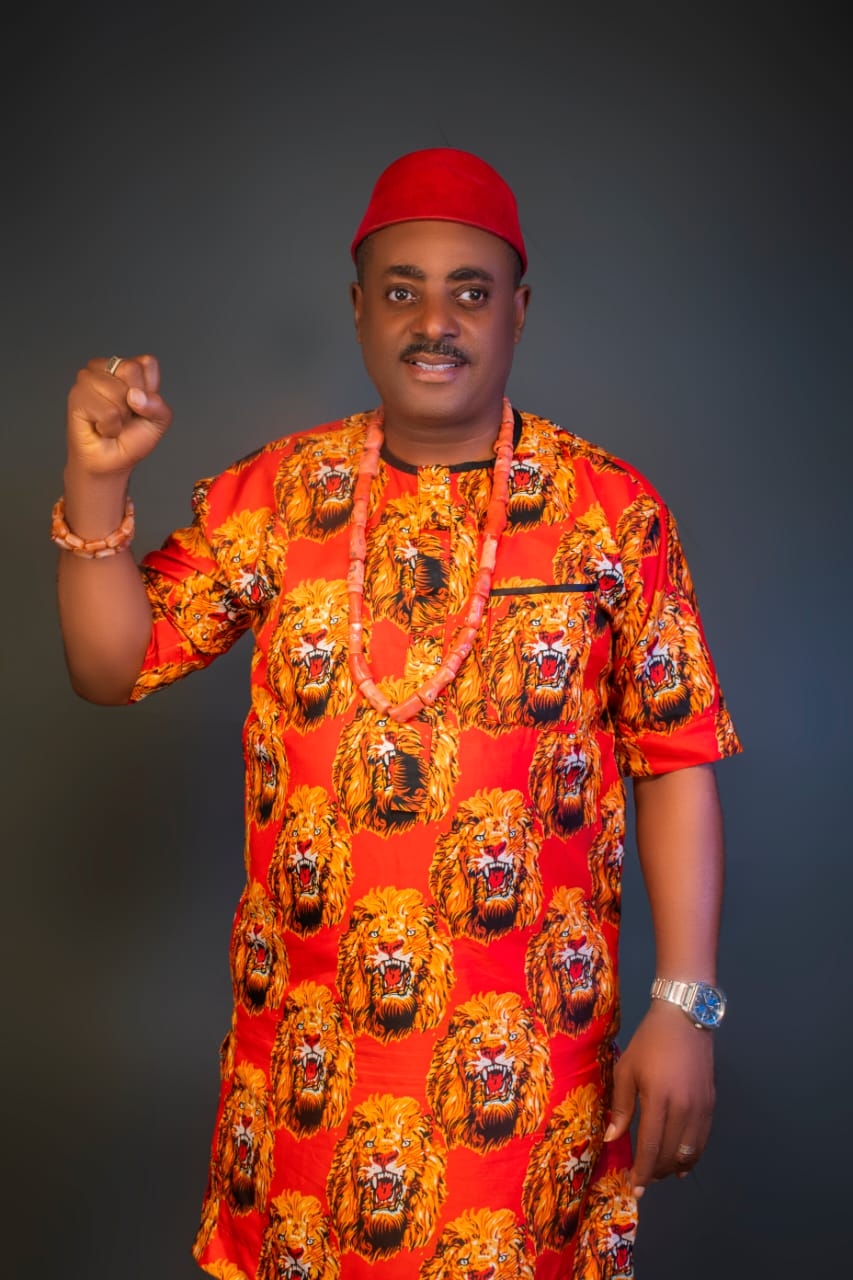
“PDP House of Representatives candidate outlines an ambitious vision to transform one of Nigeria’s richest energy corridors into a centre of enterprise, innovation and industrial growth.”
By Onyekachi Eze
For more than half a century, the names Ohaji-Egbema and Oguta have been synonymous with oil and gas.
Their vast hydrocarbon reserves have contributed significantly to Nigeria’s economy, helping to power industries, sustain government revenues and earn foreign exchange for the nation.
Yet, in a paradox familiar to many resource-producing regions across the developing world, the communities from which this wealth originates continue to battle inadequate infrastructure, unemployment, environmental degradation and limited industrial development.
To Chief Joseph Chukwuma Ikunna, the Peoples Democratic Party (PDP) candidate for the House of Representatives representing Ohaji-Egbema, Oguta and Oru West Federal Constituency, this contradiction persists because Nigeria has focused on extracting resources rather than multiplying their value.
Speaking during an interview at his country home in Mgbidi, Ikunna offered a perspective that departs markedly from the traditional political conversation surrounding oil-producing communities.
He does not regard oil as the constituency’s greatest asset.
He regards energy as its greatest asset.
“There is an important distinction,” he explains.
“Most people think oil is the resource. I disagree. Oil is only one expression of energy. Energy itself is the true strategic resource because it has the power to create industries, attract investment, support artificial intelligence, power data centres, modernise agriculture, expand manufacturing and stimulate innovation. If we begin to think differently about energy, we begin to build a completely different economy.”
It is this philosophy that underpins his vision for the constituency.
Rather than measuring success simply by the number of constituency projects executed, Ikunna believes elected representatives should be judged by their ability to reshape the economic trajectory of the communities they serve.
“Our responsibility is larger than attracting a few projects,” he says.
“Our responsibility is to create the conditions under which investment becomes inevitable. If investors have reliable energy, supportive legislation, skilled people and modern infrastructure, industries will follow. Jobs will follow. Prosperity will follow.”
His legislative agenda therefore extends beyond conventional advocacy for increased federal presence.
It seeks to position Ohaji-Egbema, Oguta and Oru West as one of Nigeria’s foremost energy-driven economic corridors—a destination where power generation, digital infrastructure, manufacturing, agro-processing, logistics, technology companies and research institutions can flourish side by side.
Such a transformation, he argues, would not only benefit the constituency but strengthen Nigeria’s wider economy by demonstrating how natural resources can become platforms for long-term productivity rather than dependence.
Ikunna insists that development can no longer be measured solely by public expenditure.
Instead, he believes government must become an enabler of private investment by providing the policy certainty, infrastructure and institutional confidence necessary for enterprise to thrive.
He envisages stronger collaboration between government, development finance institutions, universities, traditional institutions, community organisations, the private sector and the Nigerian diaspora to unlock the constituency’s economic potential.
Long before offering himself for public office, Ikunna built businesses that created employment opportunities for hundreds of people, invested in renewable energy through solar street-light projects, supported educational initiatives and assisted local entrepreneurs.
Those experiences, he says, reinforced his conviction that sustainable development is created by empowering people to produce wealth, not merely consume government spending.
His message is therefore not centred on entitlement.
It is centred on transformation.
“For too long, discussions about oil-producing communities have focused almost entirely on compensation and derivation. Those conversations are important, but they cannot be the end of our ambition. We should also be asking how our natural resources can become the foundation for one of Africa’s most competitive regional economies.”
It is an argument that reflects a broader philosophy of leadership.
To Ikunna, representation is not merely about occupying a legislative seat.
It is about connecting ideas with opportunity, policy with enterprise, and natural resources with human ingenuity.
“The greatest wealth of any nation is ultimately not what lies beneath its soil,” he says.
“It is what its people are able to create because of the opportunities available to them. My goal is to ensure that the people of Ohaji-Egbema, Oguta and Oru West are not simply custodians of natural resources, but beneficiaries of the prosperity those resources can generate.”
As the political conversation ahead of the 2027 general election gathers momentum, Ikunna hopes the constituency will embrace a new way of thinking about development.
Not one in which oil remains merely a commodity extracted from the ground, but one in which energy becomes the catalyst for innovation, industrialisation, entrepreneurship and lasting prosperity.
For him, the measure of success will not be how much oil leaves the constituency.
It will be how much opportunity stays behind.
About The Author

You may also like
-
Cover and Inside Pages of Trumpeta Thursday, July 2nd,2026
-
Ideato South Witnesses Developmental Renaissance Under Okechukwu Okwara ***Councillor Ikebundu Shines
-
2027 IS NOT 2023 (PART ONE) By Collins Ughalaa
-
Public Backlash Grows as Groups Demand Police Probe Over Fayose’s Oyo School Abduction Claims
-
The End of Janet Igohia, The Bandits Kingpin🔥🔥🔥