
FROM OIL DEPENDENCE TO EXPORT POWER: WHAT NIGERIA’S RECORD NON-OIL EXPORTS COULD MEAN FOR OHAJI-EGBEMA, OGUTA AND ORU WEST FEDERAL CONSTITUENCY 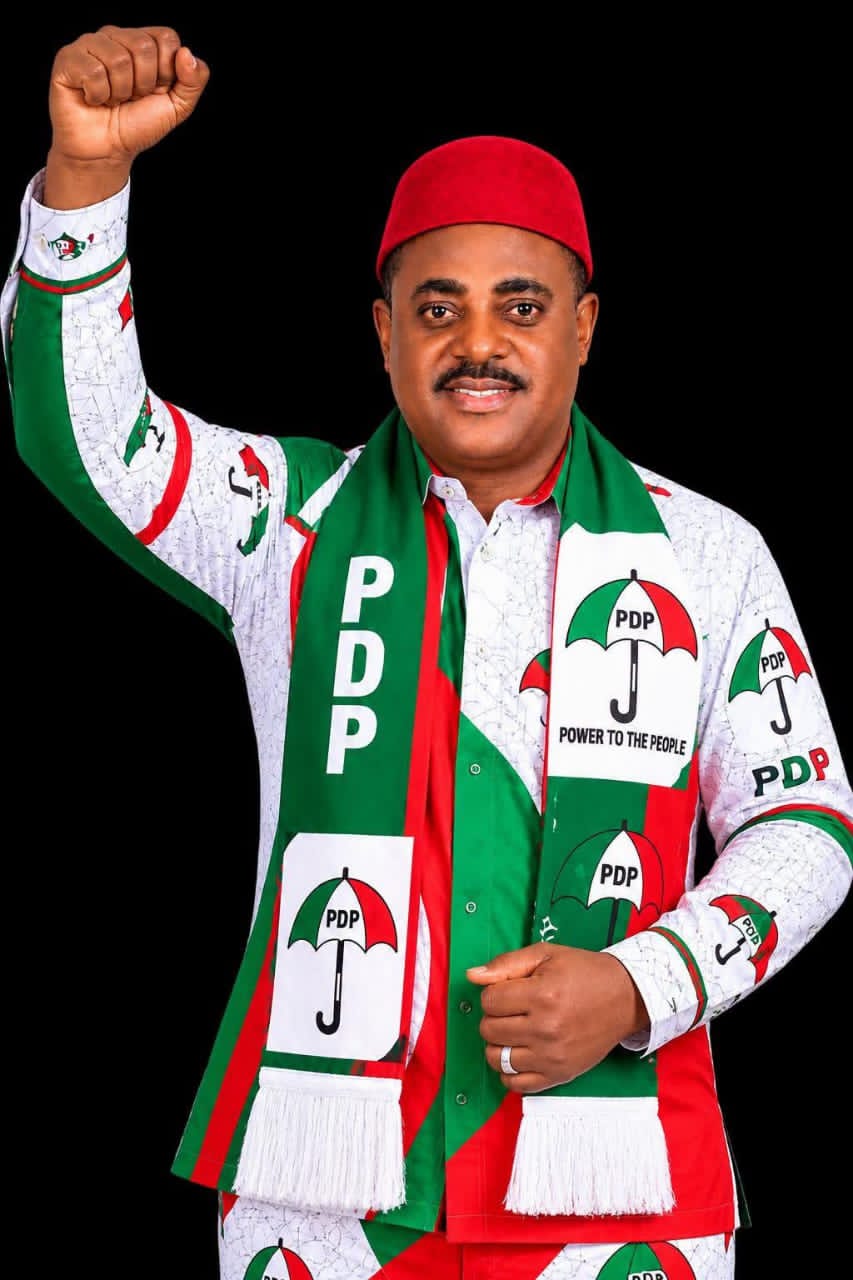
By Hon. Chief Joseph Chukwuma Ikunna (JCI)
Something significant is happening in the Nigerian economy, and those of us who believe that the greatest resource of a nation is ultimately the productive capacity of its people should pay attention.
According to the Nigerian Export Promotion Council (NEPC), Nigeria recorded US$6.1 billion in formal non-oil exports in 2025, an increase of 11.5% over the US$5.46 billion recorded in 2024.
More importantly, NEPC describes this as the highest formally documented non-oil export value in Nigeria’s history.
Nigeria exported 281 different non-oil products to 120 countries, with total export volume reaching approximately 8.02 million metric tonnes. Cocoa beans alone generated about US$1.99 billion, followed by urea at US$1.29 billion, cashew nuts at US$456.9 million, sesame seeds at US$300.3 million and gold doré at US$228.8 million.
These figures should cause us to ask an important question:
How much of this growing export economy is coming from Ohaji-Egbema, Oguta and Oru West Federal Constituency?
And an even more important question:
What must we do to ensure that our people receive a meaningful share of the next US$6 billion, US$10 billion or US$20 billion that Nigeria earns from non-oil exports?
“WE HAVE THE RESOURCES, BUT RESOURCES ALONE DO NOT CREATE WEALTH”
Our Federal Constituency sits in one of the most naturally endowed parts of Nigeria.
While Ohaji-Egbema and Oguta LGAs are already intimately connected with Nigeria’s oil and gas economy, Oru West, as an uprising oil deposit LGA in Imo State can not be undermined in its rich natural resources and land mass. Across the wider constituency we have fertile agricultural land, water resources, human capital and proximity to the commercial and industrial centres of Owerri, Onitsha, Aba and Port Harcourt.
Yet possessing resources is not the same thing as possessing wealth.
A cocoa pod sitting on a farm is a commodity.
Processed cocoa butter, cocoa powder, chocolate and cosmetics are industries.
A palm fruit is agricultural produce.
Refined palm oil, specialty fats, soaps, cosmetics and packaged consumer products are manufacturing.
Cassava can be sold from a farm for relatively little, or transformed into high quality cassava flour, starch, glucose and industrial inputs.
The difference is: Intelligence, technology, processing, standards, logistics and access to markets.
That is where government policy matters.
MY VISION: AN EXPORT ECONOMY AT CONSTITUENCY LEVEL
If given the opportunity to represent Ohaji-Egbema, Oguta and Oru West in the House of Representatives, one area I would pursue vigorously is the creation of policies that make it easier for ordinary Nigerians, particularly rural farmers, cooperatives and small businesses, to become participants in international trade.
I believe every Federal Constituency with sufficient productive capacity should be encouraged to develop an Export Development Strategy.
For our constituency, I would advocate a practical programme built around several priorities.
First, identify our export champions.
We should undertake a proper economic and agricultural mapping of Ohaji-Egbema, Oguta and Oru West to establish what can be produced competitively in each part of the constituency.
Instead of telling everybody to grow everything, we should identify products for which our soil, climate, skills and geography give us genuine advantages.
These could include high value agricultural products and their derivatives, palm based products, spices, fruits, vegetables and other commodities identified through proper agronomic and market studies.
We should also explore aquaculture and other opportunities created by our extensive water resources.
The guiding principle must be simple:
“Produce what the world wants, at the quality the world demands”.
SECOND, STOP EXPORTING POVERTY
Nigeria must gradually move away from an economic structure in which we export raw materials and import finished products manufactured from those same materials.
Where commercially viable, processing should happen as close as possible to the place of production.
I would therefore advocate the development of agro-processing and export clusters within our constituency.
Such clusters could provide shared drying, processing, cold-storage, packaging, testing and warehousing facilities that individual farmers could never afford on their own.
This is particularly important because international markets do not merely buy products. They buy products that meet standards.
Moisture content, pesticide residues, traceability, packaging, phytosanitary certification, grading and consistency can determine whether a Nigerian product enters a premium international market or is rejected.
NEPC’s existing Export Development Fund already recognises these barriers and provides support in areas including packaging, labelling, testing, certification, good agricultural practices, post harvest handling and sanitary and phytosanitary requirements.
Our challenge should therefore not always be to invent another government programme.
Sometimes the job of an effective legislator is to ensure that programmes which already exist in Abuja actually reach the farmer in Egbema, Ohaji, Oguta, Mgbidi and the other communities we represent.
THIRD, CREATE AN EXPORT DESK FOR THE CONSTITUENCY
I would work towards establishing an Ohaji-Egbema/Oguta/Oru West Export Development Desk, working with NEPC and other relevant federal and state institutions.
Its job would be practical.
Help farmers form viable cooperatives.
Help businesses register as exporters.
Connect producers to genuine international buyers.
Assist with product certification.
Provide information about export documentation.
Connect qualified businesses with export finance.
Train our young people in international trade, logistics, packaging, digital marketing and commodity aggregation.
NEPC already requires exporters to register and provides registered exporters with access to capacity building programmes, trade linkages and export incentives.
The problem is that many farmers and small businesses in rural communities have no idea these opportunities exist.
Representation should bridge that information gap.
FOURTH, REFORM EXPORT INCENTIVES TO REWARD VALUE ADDITION AND SMALL PRODUCERS
Nigeria already operates the Export Expansion Grant.
Under the current scheme, qualifying exporters can receive incentives equivalent to 5% to 15% of annual export value, depending upon the applicable product category and compliance requirements.
That is encouraging.
But I believe our export incentive system should increasingly reward businesses that process Nigerian resources inside Nigeria, employ Nigerians and create export oriented manufacturing capacity.
A farmer exporting a raw agricultural commodity creates value.
A Nigerian company buying that commodity from thousands of farmers, processing it locally, packaging it under a Nigerian brand and selling it internationally creates substantially more domestic economic activity.
Our policies should recognise that distinction.
I would also advocate simplified pathways that enable properly organised cooperatives and MSMEs to participate rather than leaving export incentives effectively accessible mainly to large corporations with sophisticated compliance departments.
FIFTH, EXPORT FINANCE MUST REACH THE GRASSROOTS
There is little benefit in telling a farmer that Europe wants his product if he cannot finance seedlings, irrigation, harvesting, processing, certification and transportation.
NEPC itself identifies access to working capital as a central requirement of export development and points exporters towards facilities available through institutions including NEXIM Bank.
We therefore need financing structures in which credible farmer cooperatives and processors can access affordable capital tied to verified production and purchase contracts.
Government should increasingly become the facilitator and risk reducer, while farmers, cooperatives and private investors become the producers.
SIXTH, TURN OUR YOUNG PEOPLE INTO EXPORT ENTREPRENEURS
When people hear “export”, they often imagine a wealthy businessman loading containers at Apapa.
That thinking belongs to yesterday.
Technology has dramatically reduced the distance between a producer in rural Nigeria and a buyer in London, Dubai, Amsterdam, Johannesburg or New York.
Our young people should therefore be trained not merely to search for jobs but to become export aggregators, quality control specialists, logistics professionals, international marketers and agricultural entrepreneurs.
Imagine hundreds of young people across our constituency using technology to aggregate agricultural production from thousands of farmers, maintain traceability records, locate international buyers and organise processing and shipment.
That is how human intelligence converts natural resources into wealth.
SEVENTH, INFRASTRUCTURE IS EXPORT POLICY
You cannot build a competitive export economy on bad rural roads.
Every extra hour that a truck spends navigating a damaged road increases the final price of the product.
Every agricultural product that spoils because electricity or cold storage is unavailable represents lost income.
Therefore rural roads, electricity, broadband, irrigation, warehouses, processing centres and cold chain infrastructure should not merely be regarded as constituency projects.
They are economic infrastructure.
When we construct a road connecting farming communities to processing centres and markets, we should be able to calculate how much additional economic production that road will unlock.
That is the philosophy I would bring to constituency development.
THE WORLD SHOULD KNOW OUR COMMUNITIES THROUGH WHAT WE PRODUCE
Imagine a future in which products grown or manufactured in Ohaji-Egbema, Oguta and Oru West sit on supermarket shelves thousands of kilometres away.
Imagine farmers who today earn hundreds of thousands of naira becoming members of cooperatives generating hundreds of millions.
Imagine processing companies purchasing crops from thousands of families.
Imagine young graduates managing export documentation and international sales without abandoning their communities for Lagos or Abuja.
Imagine containers leaving our constituency carrying finished Nigerian products bearing brands created by our own people.
That is development.
Nigeria’s record US$6.1 billion non-oil export performance tells us something extremely important.
Our dependence on crude oil is not inevitable.
But diversification must not become another beautiful statistic celebrated in Abuja while communities that possess the resources remain poor.
The next phase of Nigeria’s export revolution must reach the villages.
It must reach the farmer.
It must reach our young people.
It must create factories.
It must create Nigerian brands.
And above all, it must create wealth where the resources originate.
I believe Ohaji-Egbema, Oguta and Oru West can become a model of what happens when we stop viewing natural resources merely as things to extract and begin viewing them as raw materials upon which intelligence, technology and enterprise can build prosperity.
Because wealth is not ultimately what lies beneath our soil.
Wealth is what an intelligent and empowered people are able to create from it.
Hon. Chief Joseph Chukwuma Ikunna (JCI)
The 2027 PDP Candidate for Ohaji-Egbema, Oguta and Oru West Federal Constituency.
Creating Wealth.
Source: Most of the statistics are culled from the Nigerian Export Promotion Council — Nigeria’s Historic Non-Oil Export Performance Signals a New Era of Economic Possibility, February 24, 2026.
About The Author

You may also like
-
Akagburuonye Receives $7.3m Canadian Medical Equipment Donation, Distributes to 32 Imo Hospitals Set for November 7 unveiling as beneficiary facilities prepare to boost healthcare delivery across Imo’s 27 LGAs
-
Cover and Inside Pages of Trumpeta, Friday, October 9th, 2026
-
Cover and Inside Pages of Trumpeta, Thursday, October 8th, 2026
-
Exempt Me From Anything Not Deep-Rooted In God, Akagburuonye Cries Out
-
CHIEF CHARLES ORIE: A STEADY HAND, A BOLD MIND, AND ONE OF IMO STATE’S MOST INFLUENTIAL DRIVERS OF CHANGE