
SHOULD THE SPOUSE OF A DEPUTY GOVERNOR BE ADDRESSED AS “HIS/HER EXCELLENCY “? —A CONSTITUTIONAL, HISTORICAL, AND CULTURAL INQUIRY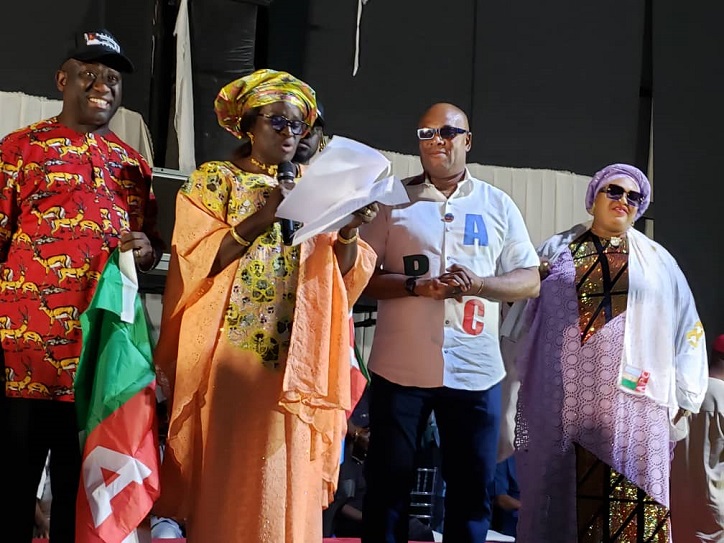
By Chinedu Agu
In recent years, an interesting, perhaps troubling trend has taken root in Nigeria’s political culture: It is the growing practice of addressing the spouse of a deputy governor as “His Excellency” or “Her Excellency.”
Across public events, government ceremonies, and even social media pages maintained by political aides, this title is now routinely conferred on individuals who hold no constitutional, political, or administrative office. While Nigeria is no stranger to the inflation of titles, this particular development demands deeper reflection.
1. The Constitutional Position: Who Is Entitled to “Excellency”?
The 1999 Constitution of the Federal Republic of Nigeria (as amended) clearly defines the offices that constitute the executive structure of a state:
Section 176(1) establishes the office of Governor. Section 186 establishes the office of Deputy Governor. Sections 5(2) and 193(1) outline executive powers vested in the Governor and delegated roles to the Deputy Governor.
At no point does the Constitution mention the spouse of the Governor, the spouse of the Deputy Governor, or any “Office of the First Lady.” Not only are these offices not contemplated, they can not be implied since they exercise no executive authority, command no budget by constitutional design, and are not elected by the people.
In constitutional tradition, the formal styles “His Excellency” and “Her Excellency” historically attach to holders of sovereign or executive authority; Presidents, Governors, Ambassadors, and sometimes Prime Ministers.
Nigeria’s Constitution recognizes the Governor and Deputy Governor as executive officers, but not their spouses. The extension of these honorifics to individuals with no constitutional mandate [their spouses] is, therefore, without legal basis.
When titles become unchecked, they drown the essence of public office.
2. Historical and Protocol Dimensions
To fully understand this creeping expansion of “Excellency,” it helps to trace how the title entered Nigeria’s political vocabulary in the first place.
The expression “His Excellency” is not indigenous to our sociopolitical traditions. It came to Nigeria through British colonial administration, where it was reserved strictly for the Governor-General, colonial governors, and occasionally, high commissioners. It signified sovereign authority exercised on behalf of the British Crown. After Independence in 1960, Nigeria retained the address as part of its inherited diplomatic and executive protocol.
During the First Republic (1963–1966), the title was used sparingly and with decorum. Only the Governor-General (and later the President) was addressed as “His Excellency.” State Governors did not initially use the style; many preferred “Governor” or “Military Governor” during the successive military regimes.
It was not until the Second Republic (1979–1983) that the American-style gubernatorial swagger entered Nigerian politics. With the adoption of a presidential system modeled loosely after the United States, Nigerian Governors began styling themselves “His Excellency,” a practice neither mandated nor prohibited by law, but gradually normalized through political imitation.
However, even then, the honorific was limited strictly to officeholders, not family members. No Governor’s spouse was styled “Her Excellency” in any formal sense.
The title’s modern inflation began in the early 1990s and deepened after 1999, when democracy returned and political culture became increasingly theatrical. Suddenly, every Governor was “Executive Governor,” every Speaker became “Right Honourable,” every Senator turned “Distinguished,” and the First Lady evolved her own fully staffed office, complete with budgets and policy initiatives.
This gradual but relentless inflation created the fertile ground for the newest mutation: styling the spouse of a deputy governor as “His Excellency” or “Her Excellency,” a title that even spouses of Governors did not commonly claim until very recently.
In essence, Nigeria took a colonial diplomatic term reserved for sovereigns, expanded it to Governors, extended it to their spouses, and now some are attempting to stretch it even further to deputy governors’ spouses. The trajectory is clear: what began as a dignified constitutional courtesy is now floating dangerously into the realm of social comedy.
In diplomatic and governmental protocol worldwide, the style “Excellency” follows strict rules. It is for Heads of state and government; Senior diplomatic envoys; and occasionally spouses of Presidents, [but only in relation to ceremonial roles tied to the presidency].
Even then, the title is derivative, not substantive.
For example, in the United States, the First Lady is “Mrs.,” never “Her Excellency.” In the United Kingdom, neither the spouse of the Prime Minister nor that of the Deputy Prime Minister carries any honorific. In India, the spouse of the President may receive ceremonial courtesies, but never a formal style of address. In South Africa, the spouse of the Deputy President is simply referred to by name.
Nigeria is, therefore, out of step with global protocol when it begins awarding executive titles to individuals who hold no office and exercise no authority.
Indeed, even the oft-criticized Nigerian practice of maintaining the “Office of the First Lady,” which has no constitutional basis, has never extended to a Deputy First Lady’s Office. The reason is simple: there is nothing to deputize. The First Lady’s office itself is extra-legal; creating a second-order derivative would amount to constitutional theatre.
The question now is, where then does this Nigeria’s love affair with honorifics come from.
This trend can not be understood without appreciating Nigeria’s cultural disposition towards titles. To put it plainly, Nigeria is a society deeply intoxicated by honorifics. If you doubt this, simply attend a community gathering, social function, or a political meeting and listen to how titles are reeled out with near-military precision: “Chief Dr. Arc. Engr. Sir Barr. Amadi Manyerenaoku.”
As a compere or anchor at public events, I have often found myself in awkward situations with individuals whose full bouquet of titles I failed, sometimes by a single prefix, to append before their names. On one occasion, a note was passed to me that a certain XYZ had refused to take his reserved seat because I accidentally omitted one of the embellishments before his name. At another event, a man I introduced as “Chief” whispered irritably as he walked past me, “It is High Chief, not Chief.”
In a country where titles serve as a form of social currency, and at times, as camouflage for deep-seated insecurity, inadequacy, or inferiority, the inflation of honorifics becomes almost inevitable. It is why, whenever someone drowns me in a cascade of self-awarded prefixes, I mischievously ask: “What exactly are you trying to hide?”
One of the most amusing examples comes from a certain Facebook acquaintance of mine, an academically-struggling law student in one of the Nigerian universities. Yet, at public and political functions, he introduces himself grandly as “Ambassador Barr. Chief Sir XYZ,” and, as though that were not sufficiently ostentatious, he concludes the litany with a confident “OFR.”
Nurses now bear “Nurse Onyinyechi.” At functions, you hear such introductions like “Scientist Azuanuka,” “Barr. Ikpeama,” “Builder Oru-Odaa,” “Surveyor Opio-ohia,” “Pharmacist Mkpuruogwu,” etc. Professions and duties are now changed to honorifics.
There also seems to be a feverish competition to out-title one another, driven by the fear that others are catching up in the hierarchy of self-awarded prestige. This is why we witness the relentless escalation of honorifics: the quiet migration from “His Royal Highness” to “His Royal Majesty,” and from “His Royal Majesty” to the more ostentatious “Imperial Majesty.”
Politicians are not left out; “Senator” becomes “Distinguished Senator,” which quickly evolves into “Most Distinguished Senator.” Among traditional and cultural titleholders, the progression is just as theatrical: from “Chief” to “High Chief,” then “Double Chief,” and inevitably “Triple Chief.” From “Nze” to “Okenze,” and soonest, “Double Nze.” The examples are simply endless.
Ironically, many of the bearers do not even grasp the historical meaning or protocol significance of the titles they carry. It is simply a race to stay ahead; a contest of empty grandeur disguised as status.
Politicians now cling to bloated titles like “Executive Governor,” “Right Honourable,” and the endlessly abused “Honourable”—a label that has somehow become available to any political charlatan who once dreamt of being a councillor but couldn’t muster even a polling-unit victory, or who was merely appointed “provost” of his party at the ward level. In today’s Nigeria, even the faintest brush with politics seems enough to confer an “Honourable” to a man even if the only thing he has ever governed is his party WhatsApp group.
Some Local Government Chairmen now expect to be addressed as “Your Excellency” or “Executive Chairman.”
Following this disturbing pattern, it is unsurprising that a deputy governor’s spouse, observing the glamour surrounding the First Lady, may adopt a corresponding style despite lacking constitutional grounding.
If misuse of titles has trivialized genuine offices, extending “Excellency” to private citizens further corrodes our democratic norms.
The use of “Excellency” for spouses of deputy governors appears harmless, but it carries real implications:
1. Erosion of constitutional boundaries
When titles intended for officeholders are given to private persons, it blurs lines between legal authority and informal influence.
2. Distortion of protocol
In formal events, incorrect usage complicates procedure and undermines the dignity of true offices.
3. Promotion of unaccountable power
When spouses assume quasi-official roles, they sometimes begin to issue directives, influence appointments, or interfere with governance, away from public scrutiny.
4. Cultural trivialization of excellence
If everyone becomes “His Excellency,” then nobody truly is. The title loses its meaning.
A return to constitutional propriety is urgently needed.
Only Governors, Deputy Governors, and other constitutionally recognized executive authorities should bear the title “Excellency.”
Spouses may receive ceremonial courtesies, but not official styles. Government event planners should standardize protocol in line with global best practices.
Civil society and the media must continue drawing attention to title inflation.
Above all, we must rebuild a culture where public office derives dignity from service, not ornamentation.
At the end of the day, a title is only as weighty as the work behind it. Bean cake does not become butter cake simply because someone gives it a fancy name.
Nigeria must resist the growing urge to convert governance into a stage play where everyone —both the lead actors and the background extras —scrambles for the loudest title. The spouse of a deputy governor is not an officeholder and should not be styled “His Excellency” or “Her Excellency.” It is not wickedness to say so; it is simply what the Constitution, protocol, and international practice have affirmed.
If we are serious about strengthening our democratic culture, then we must embrace one simple principle: titles must follow office, not ambition, ego, or marital proximity. When a nation begins to distribute honorifics the way some communities distribute kolanuts at traditional wedding events, confusion is inevitable.
Because truly, when a society starts sprinkling salt on sand and calling it soup, the only thing left is for someone to ask for fufu.
About The Author

You may also like
-
Nigeria Needs More Than Another Reform Package
-
Bridging The Urban–Rural Divide: A Vision For Balanced Development In Imo State
-
THE UNTOLD STORY OF THE NATIONAL DEMOCRATIC CONGRESS, PEACE MOVEMENT PARTY, AND THE FEDERAL HIGH COURT LOKOJA JUDGMENT
-
A LIFE POURED OUT IN THE SERVICE OF GOD AND HUMANITY: CELEBRATING ARCHBISHOP ANTHONY J. V. OBINNA AT 80
-
Appeal Court And Parties’ Deregistration By Emeka Omeihe